
A Supportive Learning Environment
Participant Profile
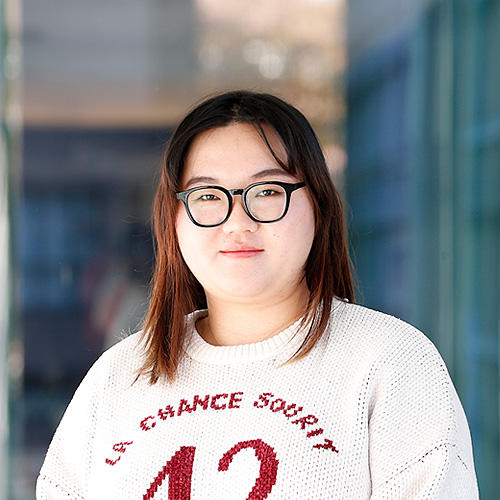
Kaku Gakushi
Second-year student in the Master's Program, Japanese Language Education, Major in Japanese Literature (as of the 2024 academic year)Kaku Gakushi
Second-year student in the Master's Program, Japanese Language Education, Major in Japanese Literature (as of the 2024 academic year)
In high school, I fell in love with the Japanese language through anime. However, it was still only a hobby at that point, and my serious linguistic interest in Japanese deepened when I majored in Japanese at university and encountered the language’s challenges. Even so, I managed to overcome those obstacles and graduate from university. After that, I began working as a Japanese language teacher, but because I had little teaching experience, I spent each day struggling with how to become a better teacher. During this time, I received a great deal of advice from a colleague who had specialized in Japanese language education, which made me realize the need to study the field more systematically. It was this turning point that led me to study in Japan and pursue graduate school. It became a major turning point in my life.
Currently, I am working in the field of Japanese language education and am conducting research on “the meanings and usage of Sino-Japanese words that stand in a synonymous relationship with loanwords.” The curriculum is structured so that in the first year of the master’s program, I study the theories and methodologies of Japanese linguistics and Japanese language education intensively, and from the second year onward, I can concentrate on my own research topic. Furthermore, I truly feel that the small class sizes foster close interaction between faculty and students, providing ample opportunities to receive careful guidance on research-related concerns and questions. Under the generous and dedicated guidance of the faculty, students are able to deepen their own research themes.
Because Keio’s Japanese Language Program includes international students of diverse nationalities who are studying Japanese, I was also able, as their tutor, to gain insight into Japanese-language education settings that I had never encountered in China. Through this valuable experience, I am re-examining my own research questions and the areas in which my Japanese proficiency is lacking, while exploring approaches to Japanese-language education that are more accessible to learners. I am confident that Keio is an ideal place to learn for those aspiring to become Japanese language teachers in the future.