
Faculty
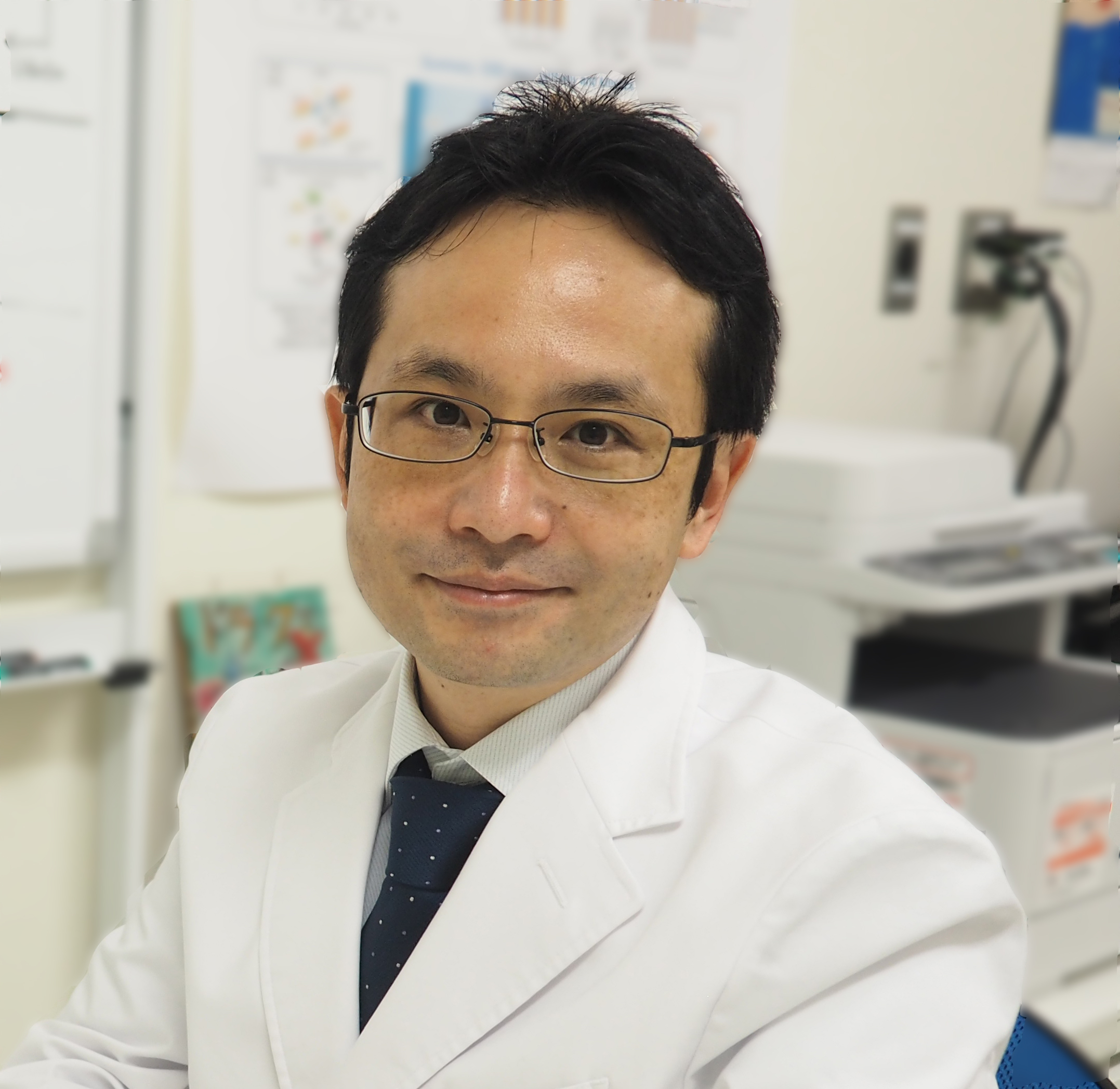

DNA repair research for cancer therapy
Our laboratory aims to elucidate the molecular mechanism underlying DNA double-strand break (DSB) repair, which is critical for maintaining genome integrity. Defects in DSB repair lead to severe mutations, including deletions and chromosomal translocations, which cause cell death. Introducing such severe mutations is important for killing cancer cells via radio/chemotherapy. In addition, DSB repair and signaling is involved in many biological events such as tumorigenesis, immunity, protection against virus, and biological development. We have recently attempted to visualize a repair event at a single DSB using super-resolution microscope 3D structured-illumination microscopy (SIM) in combination with next generation sequence techniques such as ChIP-seq and ATAC-seq.
Our final goal is to contribute to the development and improvement of cancer therapy by exploiting the knowledge of DNA repair research. We are currently focusing on the immune responses after DNA damage induction during cancer treatment.
Representative publications: DSB repair pathway choice
Transcription associated DSB repair in G1 Yasuhara et al., Cell Rep, 2022
HR initiation at transcription active loci Yasuhara et al., Cell, 2018
DSB repair pathway choice in G1 Biehs et al., Mol Cell, 2017
53BP1 dephosphorylation promotes pro-HR environment Isono et al., Cell Rep, 2017
MRE11-dependent initiation of resection Shibata et al., Mol Cell, 2014
DSB repair pathway choice in G2 Shibata et al., EMBO J, 2011
DDR dependent immune ligands regulation
DNA damage promotes HLA class I presentation Uchihara et al., Mol Cell, 2022
BER deficiency upregulates PD-L1 expression Permata et al., Oncogene, 2019
DSB-dependent ATR/Chk1 upregulates PD-L1 expression Sato et al., Nat Comm, 2017