
A Conversation with the President about Student Life at Keio University
Participant Profile
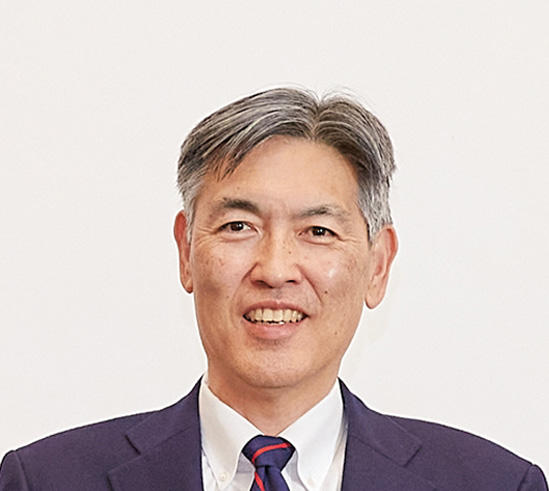
Kohei Ito
Kohei Ito
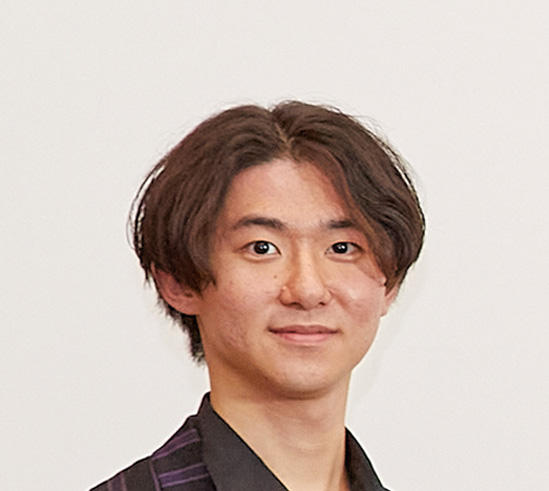
Yoshio Sho
Third-year student, Department of Physics, Faculty of Science and Technology. From Nagano Prefecture. Aims to become a researcher in elementary particle physics. Has a wide range of interests, including basketball, programming, and philosophy.
Yoshio Sho
Third-year student, Department of Physics, Faculty of Science and Technology. From Nagano Prefecture. Aims to become a researcher in elementary particle physics. Has a wide range of interests, including basketball, programming, and philosophy.
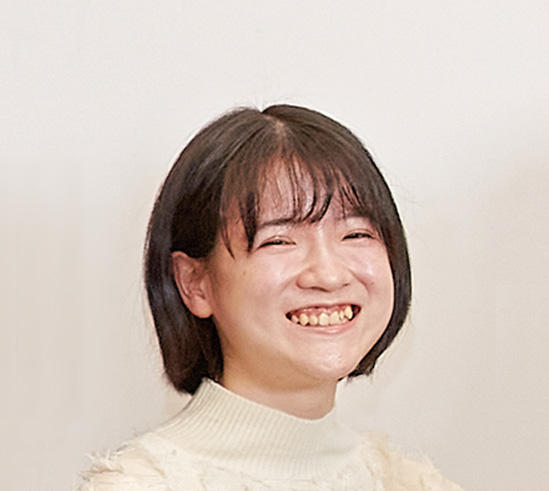
Miyako Suzuki
Second-year student, Department of Pharmacy, Faculty of Pharmacy. Resides in Kanagawa Prefecture. While studying for her qualifications and conducting research at the Faculty of Pharmacy, she strives to balance academics and sports as a member of the Athletic Association Fencing Club.
Miyako Suzuki
Second-year student, Department of Pharmacy, Faculty of Pharmacy. Resides in Kanagawa Prefecture. While studying for her qualifications and conducting research at the Faculty of Pharmacy, she strives to balance academics and sports as a member of the Athletic Association Fencing Club.
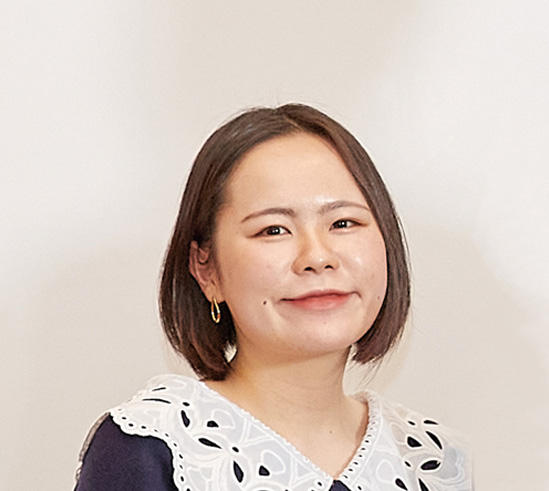
Kako Nakamura
Third-year student, Department of Political Science, Faculty of Law. From Miyagi Prefecture. Lived in the Tsunashima Student Dormitory from enrollment until February 2023, where she served as a Resident Assistant (RA). Member of the Keio-Waseda Baseball Games Support Committee.
Kako Nakamura
Third-year student, Department of Political Science, Faculty of Law. From Miyagi Prefecture. Lived in the Tsunashima Student Dormitory from enrollment until February 2023, where she served as a Resident Assistant (RA). Member of the Keio-Waseda Baseball Games Support Committee.
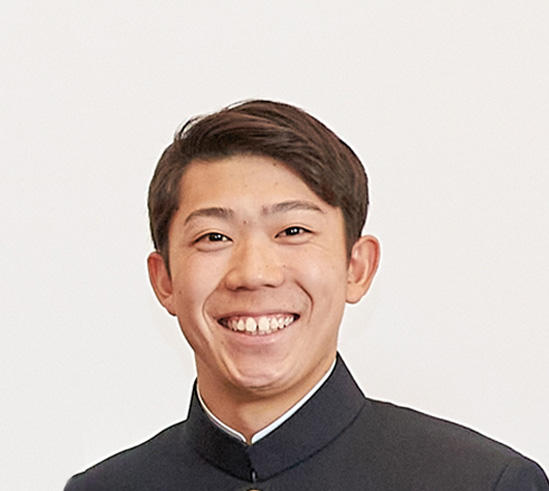
Tomoya Fujiwara
Third-year student, Faculty of Environment and Information Studies. From Kyoto Prefecture. Men's captain of the Athletic Association Tennis Club. A top player in collegiate tennis, having won individual titles at both the Intercollegiate Tennis Championships and the Intercollegiate Indoor Tennis Championships.
Tomoya Fujiwara
Third-year student, Faculty of Environment and Information Studies. From Kyoto Prefecture. Men's captain of the Athletic Association Tennis Club. A top player in collegiate tennis, having won individual titles at both the Intercollegiate Tennis Championships and the Intercollegiate Indoor Tennis Championships.
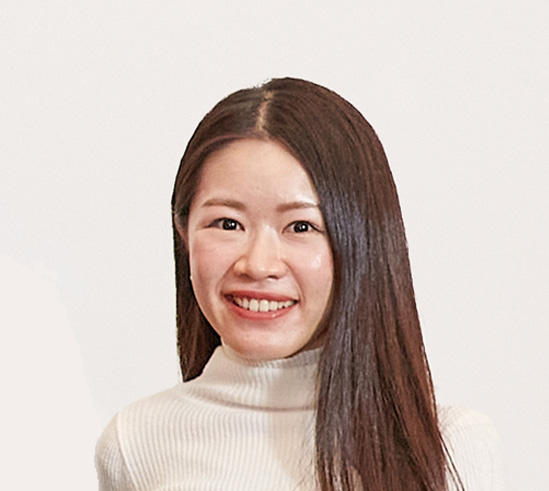
Chanikarn Torsirijaroen
Special short-term international student at the Graduate School of Business Administration. Nicknamed Ann. From the Kingdom of Thailand. After studying as a special short-term international student (auditor), she enrolled in the master's program at the Graduate School of Business Administration this spring.
Chanikarn Torsirijaroen
Special short-term international student at the Graduate School of Business Administration. Nicknamed Ann. From the Kingdom of Thailand. After studying as a special short-term international student (auditor), she enrolled in the master's program at the Graduate School of Business Administration this spring.
2023/05/31
Five Keio students from several Keio University campuses gathered at Mita Campus. They had a frank discussion with President Ito about their respective student lives and future dreams, covering topics such as "learning and research," "extracurricular activities," and "dormitory life."
Note: School years, affiliations, and the content of the discussion are as of the time of the interview (February 2023).
-First, could you all please introduce yourselves?
I'm from Miyagi Prefecture, and in my faculty, I'm studying American politics and culture in two different research groups. For extracurricular activities, I'm a member of the Keio-Waseda Baseball Games Support Committee. We mainly guide spectators and sell tickets for the cheering sections, but since we couldn't do those activities during the COVID-19 pandemic, we focused on promoting the Keio-Waseda games, including the baseball games, using social media. I've also been living in the Tsunashima Student Dormitory since I enrolled. I serve as a Resident Assistant (RA) there, supporting international students who live in the same dorm. Ann, we were in the Tsunashima Student Dormitory together before, weren't we?
Yes, I lived in the Tsunashima Student Dormitory for my first year as an international student, so RA Nakamura was a great help to me.
Not at all. I myself enrolled in the year the COVID-19 pandemic spread, so I couldn't study abroad. Being in the dormitory environment and making friends was a huge help. I enjoy interacting with international students like Ann.
That's a wonderful experience. At Keio University, we want many of our students to venture abroad, so I'm happy to hear that the student dormitories can be a starting point for that.
I'm from Nagano Prefecture. Due to my family's financial situation, it would have been difficult for me to attend a private university in Tokyo. However, thanks to the Keio University Gakumon no Susume Scholarship, which is for applicants from outside the Tokyo metropolitan area (Tokyo, Kanagawa, Saitama, and Chiba), I am able to study here now. I'm fascinated by physics, which expresses natural phenomena with mathematical formulas, and I've just recently started my research activities in the Naoki Yamamoto Laboratory, which deals with elementary particle theory.
Sho, your field of research is close to my own specialty. Are you involved in any extracurricular activities?
I'm in a basketball club and a math and physics study group. Besides that, my hobbies are too broad to narrow down, including music, art, manga, movies, literature, fashion, and philosophy (laughs).
Ann, you're from Thailand and are studying at the Graduate School of Business Administration (KBS) as an international student, correct?
Yes, in the 2022 academic year, I participated in a KBS research group as a special short-term international student. Starting this April, I will be a regular student at KBS, focusing more on my research in international business. As an extracurricular activity, I've joined a judo club. It's my first time doing judo, but it's a lot of fun. My goal is to practice hard and eventually earn a black belt.
My research lab also had an international student from Thailand, just like you, Ann. I've visited Bangkok and Chiang Mai myself and love the country.
Thank you very much. I love Japan too!
I came to SFC's Faculty of Environment and Information Studies from a high school in Kyoto with the goal of making the Athletic Association Tennis Club the best in Japan. In my faculty, I'm using my sports experience to conduct research from the perspective of "psychoanalysis x sports" in Professor Akinori Okada's seminar, who specializes in psychoanalysis. I also live in a dormitory, and I've recently started to enjoy cooking for myself.
I'm an alumnus of the tennis club and served as its director until recently, so I've been watching your success with great pride, Fujiwara. As the men's captain, I have high hopes for your future matches. Suzuki, I hear you're in the Athletic Association Fencing Club, which is rare for a student in the Faculty of Pharmacy.
Yes, in addition to my studies at the Faculty of Pharmacy, I wanted to continue fencing, which I started in high school, so I joined the club. My event is "épée," where the entire body is a valid target area. As Keio is a powerhouse in fencing, it's all I can do to keep up with my seniors, but I'm practicing hard to get results in competitions. I'm the only student from the Faculty of Pharmacy in the club, but another joy of club activities is being able to interact with students from other faculties at Hiyoshi Campus, rather than at Shiba-Kyoritsu Campus where I usually study. I feel that the Mamushidani Fencing Hall at Hiyoshi is an excellent practice environment, and I'm truly happy to be able to fence at Keio University.
-Now, I'd like to ask each of you about your "learning and research."
I'm looking forward to hearing from all of you with your diverse backgrounds. First, Ann, could you tell us why you wanted to study in Japan, and at Keio University?
I first came to Japan in 2017 for an internship. I was in Osaka at the time, and I really enjoyed living in close contact with Japanese culture. After returning home, I worked for a Japanese financial institution and thought that one day I would like to study international business in Japan. I finally came back to Japan in the fall of 2021. Attracted by the excellent faculty, I became a special short-term international student at KBS. I'm participating in an international business seminar and learning about issues in international business management.
You'll be a regular KBS student from April. Are you satisfied with the research environment at KBS?
Yes. First of all, I'm extremely satisfied with the wonderful faculty, which was a major reason I chose KBS. Also, the resources related to business are extensive, and there are plenty of spaces for discussion and conversation, which I feel encourages our desire to learn.
On the other hand, Nakamura, you're studying both "politics" and "culture" of the United States at the Faculty of Law, correct?
Yes. In high school, I had a short-term study abroad experience in the United States under the Trump administration for about two weeks, and I experienced culture shock at that time. When I was asked about politics, I couldn't answer. That experience made me want to gain a deeper understanding of the United States, which has a completely different culture and political system from Japan. The faculty at the Faculty of Law includes experts in various fields related to the U.S. I belong to two research groups: the Hiroshi Okayama Seminar, which deals with American politics and political history, and the Toshiyuki Owada Seminar, which studies American literature and popular music. I personally love American popular music, and through things like hip-hop lyrics, I've come to realize that politics and culture are inextricably linked.
It's true that the faculty at the Faculty of Law provides an environment for interdisciplinary American studies.
The Faculty of Law also has a rich offering of language classes, and I'm grateful that in addition to regular English classes, there are also intensive courses taught by native speakers.
Sho, why did you choose elementary particle physics as your field of specialization?
To be honest, choosing which field to specialize in was a difficult decision. My motivation for learning is the desire to formulate various phenomena in the natural world into mathematical equations and understand them objectively. And the ultimate goal is to "express the world with a single equation." With that in mind, I came to think that research targeting elementary particles, the ultimate constituents of matter, might be the closest to the "truth" I'm seeking. However, this field requires a vast amount of foundational knowledge before you can begin serious research, and I'm currently struggling at that stage.
Advanced fields like elementary particle physics require a particularly long "training" period before you can get to serious research. I also struggled a lot during my undergraduate years and when I studied abroad at the University of California, Berkeley. But once you reach a certain level as a researcher, you'll have a moment of discovery where you realize, "Right now, I'm the only person in the world who knows this truth." Of course, you'll have made countless mistakes before then, but if you keep working with passion for your research, there will surely be a moment when it all pays off.
I also aim to be a researcher like you, President Ito, so hearing about your experiences gives me courage.
Fujiwara, you're conducting research in the field of psychology based on your experiences as a tennis player, right?
Yes, my research theme is "When can athletes perform at their best?" and I'm thinking about what is necessary to win matches.
That's a perfect example of balancing academics and sports. As a player who has been successful since high school, did you also consider going to other top universities for tennis?
Honestly, I was torn between Keio and Waseda University. But I felt that even if I were successful at Waseda University, which has consistently been at the top of collegiate tennis, my goal would be to "maintain the status quo." I decided to enroll at Keio University with the determination to "change history!" The first thing that surprised me after enrolling was that every member of the tennis club was successfully balancing both their sport and their studies. I thought, "This is Keio, after all." In my second year, I won the individual Intercollegiate Championship, and now, as the men's captain, I'm aiming for the team to become the best in Japan. To meet your expectations, President Ito, I will focus on winning each and every match.
Suzuki, how are you finding the balance between your studies at the Faculty of Pharmacy and fencing?
The hardest part is managing my time. In my case, it might feel that way even more because of my long commute from home. Also, I have a lot of classes, and experiments take time until you get results. There have been days when my experiment time was longer than my sleeping time... But conducting experiments with my own hands is a lot of fun.
You travel from Shiba-Kyoritsu Campus to Hiyoshi for fencing practice, right?
Yes. The travel takes time, but it's really fun to practice and talk with students from other faculties at Hiyoshi. Through interacting with my club mates, I want to discover what I need to strengthen as a player, and I also want to grow as a person by following the example of my seniors.
-Finally, please tell us about your future goals and dreams.
Fujiwara, are you thinking of becoming a professional tennis player?
I was a little hesitant about whether to aim for a pro career or find a job... but I recently watched the Australian Open live for the first time and was really inspired, so now I'm much more inclined to go pro. Some of my seniors get jobs after retiring from their professional careers. I feel that having that option is also part of the appeal of Keio University.
What do you think is necessary to become a professional?
Of course, being able to play at a high level is a prerequisite, but I think another thing that's required is the ability to promote yourself to the world. Professional players who compete internationally stay abroad for long periods, so I feel you also need the toughness to express yourself overseas and grow in that environment. To do that, I believe I need to become a more "independent" person.
I would love to see you succeed abroad, Fujiwara. Suzuki, will you continue with fencing in the future?
While I'm a student, I plan to do my best in both my pharmacy studies and fencing. My goal, of course, is victory in the Keio-Waseda Games. I want to once again feel the pride and joy of being a member of Keio University there.
Have you thought about your career path after graduation?
I haven't decided for sure yet. Vaguely, I hope to help improve the quality of life for patients suffering from illnesses. I'm still deciding between the path of a researcher involved in developing better drugs and treatments, or that of a pharmacist at a dispensing pharmacy where I can interact directly with patients. However, through various experiments, I've started to discover how interesting research is. It's still a future dream, but I'd like to do research that can help people suffering from diseases with unknown causes or those with so few patients that no drugs have been developed yet.
That's a wonderful dream. Sho, I hope you also aim for research in elementary particle physics that will change the world's conventional wisdom.
Thank you. Like you, President Ito, I want to go on to a top-level graduate school abroad and improve myself while being challenged by talented people from all over the world. I had some doubts after entering university, but in the end, I feel most like myself when I'm studying physics. I've also discovered the joy of teaching through my part-time job as a private tutor, so I'm also thinking I'd like to teach at a university in the future.
Nakamura, how do you think you can use the knowledge of American politics and culture you're gaining at university in the future?
In my case, I'm particularly focusing my research on race, gender, and sexuality, so I hope to do "behind-the-scenes" work to leverage that knowledge to improve Japanese organizations and society. In the Keio-Waseda Baseball Games Support Committee as well, the hardworking athletes are the main characters, and we have supported them from behind the scenes. I think I've discovered through my student life that my aptitude lies in fulfilling such a role.
Ann, what are your future plans now that you'll be officially studying at KBS from April?
In my first year, I plan to study with my KBS peers as I have been, and from the second year, I plan to study abroad using the MBA program. I've experienced the joy of meeting people from diverse backgrounds at Keio University, so I want to meet even more diverse people and learn with them at a business school in Europe or the US. In the future, I'd like to find a job in Japan and work as a business consultant, playing a role in making the relationship between Japan and Thailand even closer.
Hearing about your student lives and future dreams today has been very informative, and above all, as a Keio alumnus, it has made me very happy. With your stories in mind, I will continue to pursue the question, "What is the best environment for Keio students to learn and unlock their potential?" I also want to continue evolving so that we can be an attractive option for young people from overseas, like Ann.
-Thank you all very much for your time today.