
How Is the Mind Connected to the Brain and Body? Exploring the Mechanisms through Scientific Experiments
Participant Profile
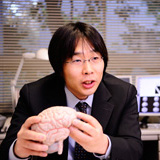
Satoshi Umeda
Satoshi Umeda
Within the field of psychology, I conduct research in an area known as cognitive neuroscience, which seeks to understand the human mind through brain function. While progress in brain science has been remarkable, clarifying the functions of various brain regions, my primary focus is on researching the mechanisms of emotion and sociality.
Emotion refers to mental states and feelings such as joy, anger, and surprise, but it is actually closely linked to the body's autonomic nervous system activity, like a racing heart or sweaty palms. Furthermore, sociality is related to higher-order emotions like empathy and loneliness and is deeply involved in communication. The frontal lobe is one of the main brain regions responsible for emotion and sociality. When the frontal lobe is damaged by illness or accident, it can lead to emotional and personality disorders. Similarly, studies of the brains of individuals with developmental disorders who exhibit reduced sociality also show the involvement of the frontal lobe. It is not yet well understood how mental functions like emotion and sociality are linked to specific activities in the brain and body. To solve this mystery, our laboratory is now fully equipped with devices for imaging brain function and for recording various physiological activities of the body, and systematic research using these tools is underway. Within this context, and based on the research questions mentioned above, I am working to elucidate the complex mechanisms of the brain, body, and mind by comparing our findings with research on brain damage and developmental disorders.
How the Results of This Fundamental Research Can Be Applied in the World
By accumulating the results of such fundamental research, various possibilities for clinical application become apparent. We can propose effective rehabilitation methods for people with cognitive impairments and provide data that can form the basis for coping strategies and diagnostic criteria for individuals with developmental disorders. Furthermore, our work can suggest that a decline in autonomic nervous system function may be linked to issues such as school refusal, and it can also contribute to the development of various drugs and testing methods.
*Affiliations, job titles, etc., are as of the time of the interview.