
Fascinated by the Beautifully Illustrated Nara Ehon: A Quest to Uncover Their Creators
Participant Profile
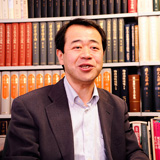
Ishikawa Toru
Ishikawa Toru
Nara ehon are illustrated manuscripts that were popular from the late Muromachi period to the mid-Edo period. Some of the stories, such as "Urashima Taro" and "Issun-boshi," are still read today. Although some Nara ehon have high artistic value and are important Japanese cultural properties, they have not been extensively studied. Even basic facts like who created them, when, and how remain largely unknown. For the past decade, I have been researching Nara ehon, taking on the challenge of identifying their creators.
Nara ehon were commissioned by feudal lords (daimyo) and wealthy merchants, but the books bear no signatures of their creators. However, the number of creators at the time was limited. The key to uncovering them lies in the handwriting. Through the Illustrated Book Project, which digitizes Nara ehon, I have advanced my research by focusing on the comparison and classification of handwriting. As a result, I was able to identify Asai Ryoi. As it turns out, Asai Ryoi was a prominent writer of the early Edo period. By comparing the handwriting in the Nara ehon with that of Asai Ryoi in his youth, it became clear that they were identical, revealing his involvement in their creation.
Research using digital images has revealed another creator: Isome Tsuna. She was a woman active from the early to mid-Edo period as a creator of *oraimono*, textbooks used in temple schools (*terakoya*), but it turns out she also created Nara ehon. While Asai Ryoi only wrote the text, with the illustrations done by a painter (*eshi*), Isome Tsuna is notable for having created both the text and the illustrations. She could probably be called Japan's first picture book author.
Sharing Their Appeal with a Broader Audience
Nara ehon and picture scrolls (*emaki*) are also prized as works of art, and many have found their way overseas. The Dutch physician Siebold was one such collector. For this reason, I frequently visit libraries, museums, and art galleries abroad to promote the digitization of these works. There is still a high probability of finding more works in Japan as well. That's why visiting antique shops and secondhand bookstores is essential. I also browse local antique markets and photograph items with a digital camera.
The discovery of new works can lead to the identification of new creators. There are already individuals whose names we know, but we do not know what kind of people they were. I hope to clarify this through further research.
Nara ehon are captivating just to look at. However, it is a shame that they are not as well known to the general public as *ukiyo-e*. I believe that sharing their appeal through exhibitions and other events is also an important part of my work.
*Affiliations and titles are as of the time of the interview.