
Finding something you can be passionate about enriches your life.
Participant Profile
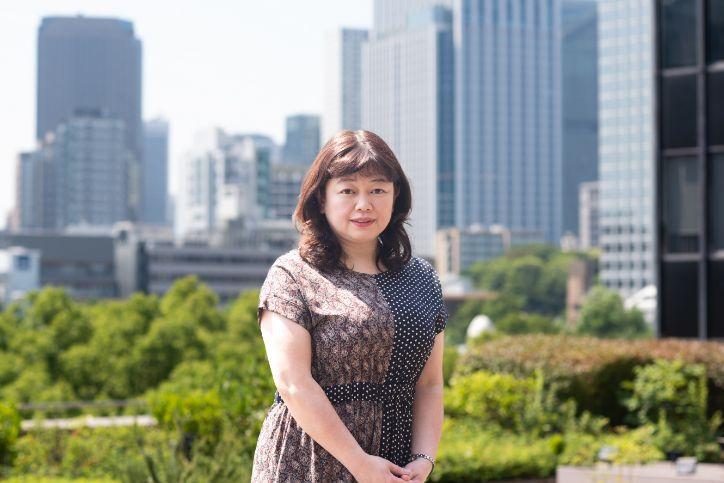
Megumi Tago
Professor, Department of Hygienic Chemistry, Faculty of PharmacyMegumi Tago
Professor, Department of Hygienic Chemistry, Faculty of Pharmacy
My interest in the mechanism of "why does this happen?"
is the most important thing in my life as a researcher.
As you all study at the Faculty of Pharmacy,
I encourage you to find something that interests you, something you can be passionate about.
I am sure it will enrich your lives.
As of June 2022
The mechanism of disease onset is like a puzzle.To solve it, we focus on a single piece.
The field of Hygienic Pharmacy, which I am in charge of, is, as the characters suggest, the study of "protecting life." To be more specific, its main purpose is to understand various life phenomena, unravel the mechanisms of disease onset, and build the foundation for developing therapeutic drugs and preventive methods.
What we are currently working on is research to clarify the mechanism of carcinogenesis by focusing on mutant tyrosine kinases. Tyrosine kinase is a crucial molecule for signal transduction pathways in the immune system. It is normally activated and functions only when needed, but in cancer, a tyrosine kinase with a gene mutation exists and is constantly activated. In other words, to solve the "carcinogenesis puzzle" that begins with a gene mutation, we are focusing on one piece: the tyrosine kinase within the cell.
Research on mutant tyrosine kinases reveals the potential for new anticancer drugs. With conventional anticancer drugs, the goal is to suppress the proliferation of cancer cells, so they affect normal cells as well as cancer cells. Recently, however, molecularly targeted drugs have been developed. These drugs identify the molecules that cause cancer and act only on those molecules, and they are expected to have fewer side effects and high therapeutic efficacy. To create these new-generation anticancer drugs, it is necessary to discover new molecules that can serve as therapeutic targets, which again requires us to clearly unravel the mechanism of carcinogenesis.
Adding scientific evidence to the results of epidemiological studies that suggest effectiveness against diseases,turning them into more meaningful information.
As part of our cancer countermeasures, along with research leading to the creation of new-generation anticancer drugs, there is another theme we are working on. It is the discovery of molecules with cancer-preventive effects among compounds derived from natural products and food ingredients.
One epidemiological study of breast cancer patients showed that the effects of anticancer drugs were higher in those who regularly drank coffee. To clarify the reason for this, we conducted verification experiments using actual breast cancer cells and found that the combined use of coffee components and breast cancer drugs enhanced the effect of suppressing cancer cells.
Based on the results of epidemiological studies, various preventive methods for lifestyle-related diseases, including cancer, are being considered. There may be combinations of drugs and foods that seem effective, but the reasons are not well understood. By providing scientific evidence for such hypotheses through rigorous experiments, I believe we can contribute highly effective and reliable information back to society.
Seeking opportunities to apply pharmacy studies more broadly.The diverse career paths of Keio pharmacy students.
I feel that the number of male students studying at the Keio University Faculty of Pharmacy, including in my own laboratory, has increased. I originally graduated from Kyoritsu College of Pharmacy, which was a women's college at the time, so it feels like a different era... perhaps that's an exaggeration.
What I sense from the students at the Faculty of Pharmacy is the brightness of their future. The fields where they can be active after graduation are expanding, and quite a few choose professions from a wide range of options that are not necessarily confined to pharmacy. For example, some join manufacturers to develop medical records, while others become lawyers who can utilize their medical knowledge. Rather than going into fields unrelated to pharmacy, my impression is that they are choosing places where they can apply their pharmacy studies more broadly. Of course, many also become pharmacists or work in the pharmaceutical industry, so I think it's fair to say that the career paths of our pharmacy students are rich in diversity.
I encountered my current research theme as a graduate student.Because I love it, I can continue for a long time.
I hope that all students find something they can be passionate about as soon as possible. It's true for everything, not just research, that it's hard to learn if you're not interested. If it's something you truly love, you can continue for a long time, even if you encounter some difficulties. Continuing for a long time is very important, and it brings opportunities to achieve great results. It doesn't matter if you're not particularly good at it; as long as you love it, that's all that matters. Your passion will surely pave the way.
I myself was not particularly skilled at experiments. I entered the Faculty of Pharmacy because I liked chemistry and biology classes, and I wanted a job I could do for the rest of my life, which led me to the path of research. I encountered the theme I am still working on as a graduate student, and I continue with it because I still find it fascinating. Having something you are passionate about enriches your life. We, the faculty, hope to support you in your "search for what you love."