
Turning Predictions into Certainty
Participant Profile
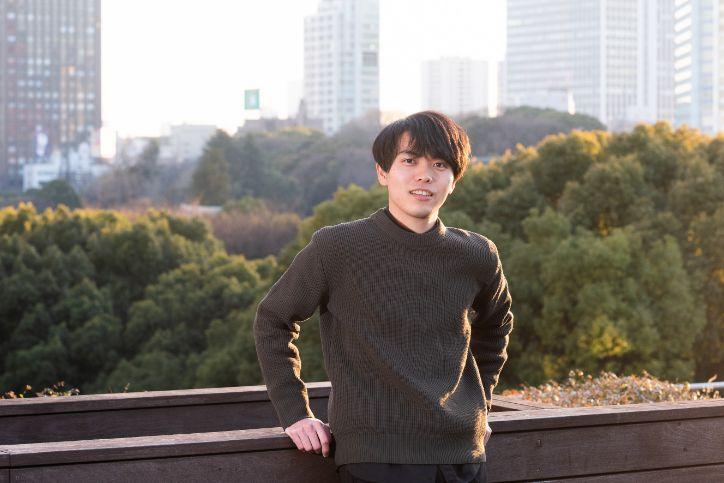
Yuki Ohya
1st year, Ph.D. program, Major in Pharmaceutical Sciences, Graduate School of Pharmaceutical SciencesYuki Ohya
1st year, Ph.D. program, Major in Pharmaceutical Sciences, Graduate School of Pharmaceutical Sciences
On the mucosal surfaces of organs that are constantly in contact with the outside of the body, such as the nose and intestines,
a sophisticated immune system has developed to defend against bacteria and viruses.
Elucidating this function is crucial for the development of new therapeutic drugs and treatment methods.
In fact, the eye also has an immune function, but the details are not well understood.
Mr. Ohya is focusing on this ocular immune function in his research.
As of December 2022
Photo by Keio University Faculty of Pharmacy
Unraveling the Unknown World of Immunity
In the eye, tears containing antibodies and antibacterial components wash away foreign substances from the mucosal surface. As tears flow into the nasal cavity, they pass through a developed lymphoid tissue called tear duct-associated lymphoid tissue (TALT), which prepares for foreign substances invading from the outside world. However, because this tissue is located in a complex part of the skull, making its precise location difficult to identify, detailed research had not progressed. Mr. Ohya and his colleagues succeeded in establishing a technique to isolate TALT from mice. They then conducted a detailed analysis using the isolated TALT, definitively establishing the existence of M cells, which are crucial for mucosal immunity. M cells have the role of taking in bacteria and viruses to initiate an immune response. While their function in the intestine is well known, their existence in TALT had only been presumed. By isolating TALT and confirming the presence of molecules such as GP2 and Sox8, which serve as markers for M cells, they were able to prove for the first time the existence of M cells functioning in the eye.
A Desire to Help Many People through Research
"The immune system, where each cell recognizes the others and plays a precise role, is fascinating," says Mr. Ohya, his eyes lighting up. The complexity of the immune system means that research is not always straightforward. Predictions are often proven wrong. He says that in such moments, he finds it interesting to compare his findings with previous research and approach the truth step by step through repeated hypothesis testing. Mr. Ohya is enrolled in the university's unique "Integrated Master's and Doctoral Course," which allowed him to start his research in earnest at an early stage, accelerating his work by summarizing his results in papers and presenting them at academic conferences. Recently, he has identified a method to increase M cells in TALT, clarifying the importance of their function. "I want to advance research on immune responses to help develop treatments and drugs for conditions that affect many people, such as hay fever," says Mr. Ohya. He is sure to continue making steady progress.
Q. What is pharmaceutical science to you?
A. The culmination of the body's various mechanisms.