
Toward a Comprehensive Understanding of Local Communities
Participant Profile
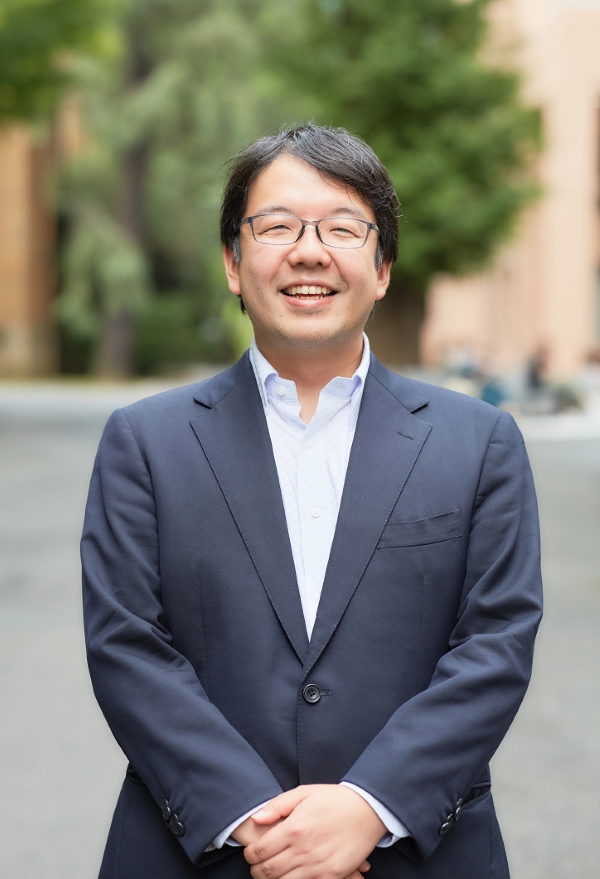
Kasanori Kasai
Associate Professor, Department of Political ScienceKasanori Kasai
Associate Professor, Department of Political Science
Even within sociology, which is considered a relatively new academic discipline, my major, community sociology, is a particularly young field. For example, the Japan Association for Community Sociology originated from urban and rural sociology and was organized during the period of high economic growth to address issues in local communities. At Keio University, pioneers in these fields, such as Fukutarō Okui and Takeo Yazaki in urban sociology and Kizaemon Aruga in rural sociology, taught.
While there are various approaches and subjects in community sociology, my research can be summarized into the following four main points: (1) research on the units of local communities, (2) research on coexistence within these units, (3) research on methodologies for approaching local communities, and (4) practical applications and research for opening up research to local communities.
(1) Units of Local Communities
In modern society, people move around frequently, and it may now be rare for someone to take over the family business in the house where they were born and raised. Nevertheless, many people have a hometown, or even if they do not, they engage in social interactions within the area where they live. When social interactions accumulate within a spatial area, it becomes a local community, but these communities are incredibly diverse and multi-layered. Therefore, I am attempting to achieve a comprehensive understanding of local communities by combining an approach from the perspective of spatial areas using picture maps from the post-modernization era with an approach from the perspective of social interactions, such as the centuries-old "kō" associations.
(2) Coexistence in Local Communities
Since a local community is merely a group of people in close spatial proximity, it includes individuals with different values. Nevertheless, our predecessors must have introduced certain mechanisms into society to prevent conflicts from escalating. Based on the idea that folk events in traditional settlements and residents' autonomy in new towns function as a "repertoire for a symbiotic society" to overcome value conflicts, I collect and analyze materials on folklore and self-governance. I place importance on the stance argued by Aruga that creativity is born from tradition.
(3) Methodology for Community Research
Just as the Chicago school of urban sociology developed "triangulation" by incorporating diverse research methods from its early days, I also eagerly adopt any method that allows me to approach local communities in my own research. Some of these methods, such as Geographic Information Systems (GIS) and text mining, require the use of computers. However, the foundation of my methodology is fieldwork and life surveys. In recent years, I have also been exploring mixed methods research from the perspective of how to analyze large-scale qualitative data without losing its qualitative nature.
(4) Collaboration with Local Communities
To open my research to society and to enable collaborative research and the utilization of results with local communities, I also actively incorporate action research and workshops. Furthermore, from the perspectives of public humanities and public history, I am also keenly interested in and researching how to co-create the outcomes of the humanities and social sciences with society.