
Reorganizing the World from a Minority Perspective
Participant Profile
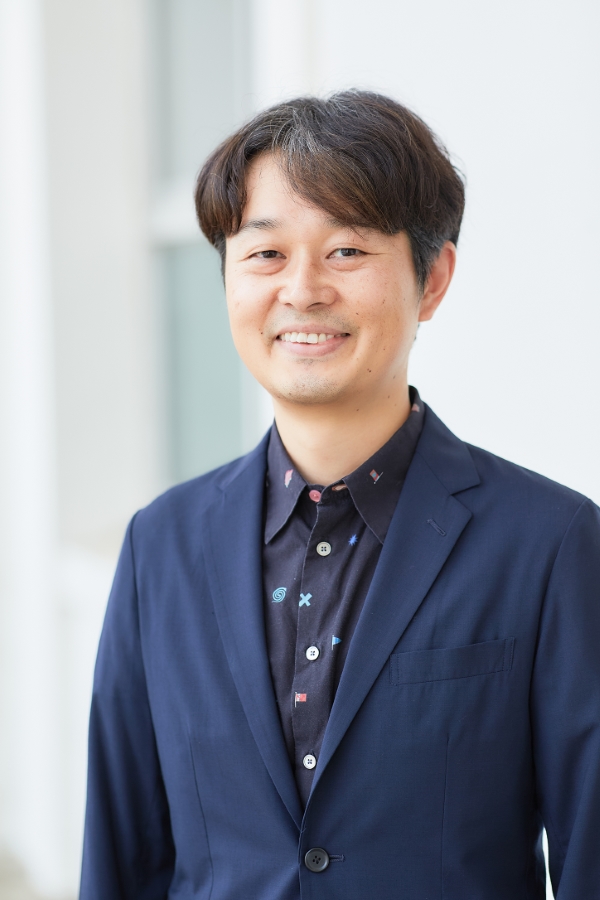
Michio Arimitsu
Professor, Faculty of LawMichio Arimitsu
Professor, Faculty of Law
The Impact of the "Slave Narrative"
My field of specialization is American Studies and African American Cultural Studies. I am sure you all still remember how the Black Lives Matter movement gained global recognition in 2020, sparked by the killing of George Floyd by a white police officer amid the raging coronavirus pandemic. Since then, it has become relatively easy to find information about anti-Black discrimination and racial issues, even in Japanese. My own encounter with African American history and culture, and the start of my research, was sparked by an exchange program to Canada during my undergraduate years, more than 20 years before that. I still remember the shock I felt when I first read a "slave narrative" in an American literature class I happened to take while studying abroad.
Many of the people enslaved in the American South in the 19th century did not even know their own birthdays, were forbidden to read or write, and had almost no time to spend with their families. In some cases, they were treated as property by their own biological fathers—white slave owners who had raped their mothers—or were sold off by their white half-siblings. What surprised me even more was that among those who had been held in bondage for generations, there were heroes who used every means possible to learn the forbidden skills of reading and writing. They used this ability not only to gain their own freedom but also to risk their lives to help their fellow enslaved African Americans. This book was filled with historical facts that I had never learned about in Japan. The author was a man named Frederick Douglass. Born into slavery in the American South, he escaped to the North and gained his freedom, after which he wrote an autobiography in 1845, just before the Civil War, describing the horrors of slavery and the resilience and passionate desire for freedom of African people. Douglass also traveled to Great Britain, where he advocated for the emancipation of his enslaved brethren. Moreover, he supported the movement for women's rights, who at the time did not have the right to vote, and when the Chinese Exclusion Act was enacted, he directly criticized the racism behind it. He was a tremendous figure who moved the nation with his pen and his eloquence.
Encountering "Invisible Man"
After returning to Japan from my studies abroad, I devoured African American literature. What left a particularly strong impression on me was "Invisible Man" (1952) by an author named Ralph Ellison. Also impressive were the many haiku written in English by the author Richard Wright, a mentor figure to Ellison, after he moved to France late in his life. The former novel vividly depicts, through skillful metaphors, how African Americans, marginalized as a minority in the United States, are reduced to "invisible men" by mainstream society. It also pioneered the importance of the word "diversity" and (as I learned much later) deeply influenced the Nobel laureate Kenzaburo Oe in Japan. The latter, Wright's haiku, were composed when the Black author, who had considered literature a "weapon" to fight racial discrimination, was confined to his sickbed. They depict the relationship between nature and humanity in haiku form, rather than the conflicts of the human world. Wright's haiku taught me that the scope of African American literary sensibility and imagination is dynamic, unbound by nation or race.
Intersectionality as a Global Intangible Cultural Heritage
The works introduced above are all by African American men, but the literature by African American women, including the Nobel laureate Toni Morrison, is also fascinating. They have undertaken various challenges to make visible the oppression and violence that arise where race intersects with attributes such as gender and class. The concept of "intersectionality," which Black feminism has long practiced, theorized, and which Black women's literature has embodied, can be described as a precious global intangible cultural heritage that people fighting against discrimination and oppression in every country and region on earth can learn from and apply.