
Takahiro Hoshino - Awarded in 2018
Participant Profile
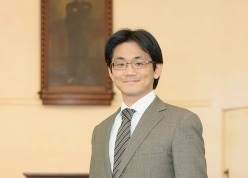
Takahiro Hoshino
Econometrics, Behavioral Economics, Marketing ScienceIn 2004, he completed his studies in the Doctoral Programs at the Graduate School of Arts and Sciences, The University of Tokyo. He holds a Ph.D. in Arts and Sciences and a Ph.D. in Economics [Ph.D. (Economics)]. After serving as an assistant at The Institute of Statistical Mathematics, Research Organization of Information and Systems; an associate professor at the Graduate School of Economics, Nagoya University; and an associate professor at the Graduate School of Education, The University of Tokyo, he assumed his current position in 2015. He is the Vice-President of the Association of Behavioral Economics and Finance. Since 2017, he has also served as a team leader at the RIKEN Center for Advanced Intelligence Project (AIP). In 2017, he received the JSPS Prize and the Japan Statistical Society Research Prize. In 2018, he received the Keio Award. *Profile and position are as of the time of the interview.
Takahiro Hoshino
Econometrics, Behavioral Economics, Marketing ScienceIn 2004, he completed his studies in the Doctoral Programs at the Graduate School of Arts and Sciences, The University of Tokyo. He holds a Ph.D. in Arts and Sciences and a Ph.D. in Economics [Ph.D. (Economics)]. After serving as an assistant at The Institute of Statistical Mathematics, Research Organization of Information and Systems; an associate professor at the Graduate School of Economics, Nagoya University; and an associate professor at the Graduate School of Education, The University of Tokyo, he assumed his current position in 2015. He is the Vice-President of the Association of Behavioral Economics and Finance. Since 2017, he has also served as a team leader at the RIKEN Center for Advanced Intelligence Project (AIP). In 2017, he received the JSPS Prize and the Japan Statistical Society Research Prize. In 2018, he received the Keio Award. *Profile and position are as of the time of the interview.
Learning to acquire the ability to foresee the future and make decisions—something that cannot be replaced by artificial intelligence.
Research Theme and How He Came to It
My specializations are econometrics and behavioral economics, and my applied fields include marketing, the economics of education, and the economics of business administration. I entered university as a science major, so I never imagined back then that I would be in my current field of research. However, I arrived here through my research into how better decision-making is possible.
The Appeal and Fascination of the Research Theme
I think we often reflect on our lives by comparing our present selves with personal "what if" scenarios, such as "What if I had studied a little more before the test?" "What if I had never met that friend?" or "What if I hadn't changed schools?" This "what if" concept can be applied not only to personal issues but also to corporate behavior and national policies. For example, if a store's sales increase, and they had previously lowered their prices, it's easy to think, "Sales went up because we lowered the prices." But is that really the effect of the price reduction?
If the "what if" scenario "Sales would have increased even without the price cut because the economy is good now" is correct, then the price reduction had no effect. In other words, the difference between the "what if" scenario—where all other factors besides the price cut are held constant—and the current situation is what can be called the "pure effect" (i.e., the causal effect) of the price cut on sales. I conduct statistical research to investigate causal effects using surveys, experiments, and behavioral data.
The scope of application for this kind of statistics is broad. It can be used to verify the effectiveness of various fields, including corporate marketing measures like the price reductions mentioned earlier, government and municipal policies, and even treatment methods in medicine, teaching methods in education, and small class sizes. Because of this, I participate in various collaborative research projects.
Furthermore, I am also engaged in research on the mechanisms and tendencies of human decision-making that lie behind phenomena such as consumers reacting little to small price cuts but overreacting to price increases of the same amount, or procrastinating on exercise and dieting even when it is rational for maintaining health. This is the field known as behavioral economics, which is essential for economics to be more useful in solving real-world problems, and there are still many research challenges remaining, which makes it rewarding.
A Message for Students
I'm sure you've seen stories in the media recently about how "artificial intelligence will take many people's jobs in the future." In large law and accounting firms in the United States, lawyers and accountants—other than those with strong negotiation skills who can fight in court or those who can consult by reading changes in the business environment—are engaged in work that involves reading past precedents and cases to prepare for them. It seems this work is increasingly being replaced by artificial intelligence. Thus, it is predicted that an era is coming where specialized knowledge and qualifications alone will not be enough to make a living.
However, artificial intelligence is merely finding patterns from past data and is not good at reading corporate strategies between companies, foreseeing the future amidst changing technological environments, solving problems creatively, or making decisions. In economics, various thinking tools are available that take into account the fact that "discussions based solely on past data will become irrelevant if the situation changes and people's expectations and economic behavior shift" (this is known as the Lucas critique). I hope that through the perspectives and ways of thinking cultivated in the curriculum offered by the Faculty of Economics, you will acquire the ability to foresee the future and make excellent decisions in an era of great change.
(Interview conducted in December 2018)