
Yoshifumi Konishi - Appointed in AY2020
Participant Profile
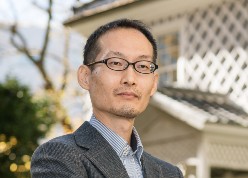
Yoshifumi Konishi
Empirical Microeconomics, Environmental EconomicsPh.D. in Applied Economics, University of Minnesota, 2008. After working in the Investment Research Division at Goldman Sachs Securities and serving as an assistant professor at Williams College and an associate professor at Sophia University and the University of Tsukuba, he assumed his current position in 2020. *Profile and position are as of the time of the interview.
Yoshifumi Konishi
Empirical Microeconomics, Environmental EconomicsPh.D. in Applied Economics, University of Minnesota, 2008. After working in the Investment Research Division at Goldman Sachs Securities and serving as an assistant professor at Williams College and an associate professor at Sophia University and the University of Tsukuba, he assumed his current position in 2020. *Profile and position are as of the time of the interview.
Solving Global Environmental Problems by Leveraging the Methods of Economic Theory and Empirical Economics
My Research Theme and How I Encountered It
My specialty is a field that considers the design of effective and economically efficient environmental policies by applying the methods of economic theory and empirical economics to various research themes in the environmental field in an integrated and organic way. When I had just obtained my Ph.D., my research was more on the applied theory side. However, at the Faculty of Economics at Williams College, where I was fortunate to be hired, it was the rise of the "credibility revolution" in empirical research, and many of my colleagues were conducting very fascinating research in the field of empirical microeconomics. Re-examining the research I was working on at the time from an empirical microeconomic perspective was the catalyst for my shift to my current field of expertise.
The Appeal and Fascination of My Research Theme
In my field of expertise, we emphasize carefully extracting (identifying and estimating) the "causal mechanisms" and "causal effects" of environmental policies from data. When you look closely at real-world data, you begin to see that things that at first glance seem to contradict economic intuition are actually consistent with economic theory. Conversely, you find that apparent consistencies are actually consistent with different economic mechanisms or intuitions. I find the thought process of tackling these extremely advanced puzzles related to real-world economic behavior, using the knowledge and methods of economic theory and empirical economics (econometrics and statistical causal inference), to be extremely fascinating. Moreover, the appeal of my specialty is not just that the thought process itself is interesting, but also that the results of careful research can contribute to the design of systems and policies that solve real-world environmental problems more effectively and economically efficiently.
A Message to Students
According to current scientific knowledge, it is considered desirable to reduce the world's net carbon dioxide emissions to zero by 2050 to avoid irreversible and catastrophic environmental and economic damage. However, the path to transforming our society, which has heavily relied on fossil fuels, into one that can be sustained solely by clean and safe energy is extremely challenging. We need to mobilize a wide range of initiatives, including renewable energy, electricity storage, carbon capture and storage technologies, and energy-saving transportation and work styles. However, the real economy is like a mass of inertia driven by economic principles, and it is impossible to achieve such a societal transformation through the efforts of only a few companies and households. It is necessary to effectively establish systems and policies so that such initiatives become desirable for all companies and households. Economics provides various tools and ways of thinking for this purpose. Please study economics with passion.
(Interview conducted in December 2020)